Oil and petrochemical logistics
For tank trucks moving petroleum or petrochemical cargoes where prior cargo, change-of-product requirements and the cleaning route need project review.
01 / Tank truck cleaning
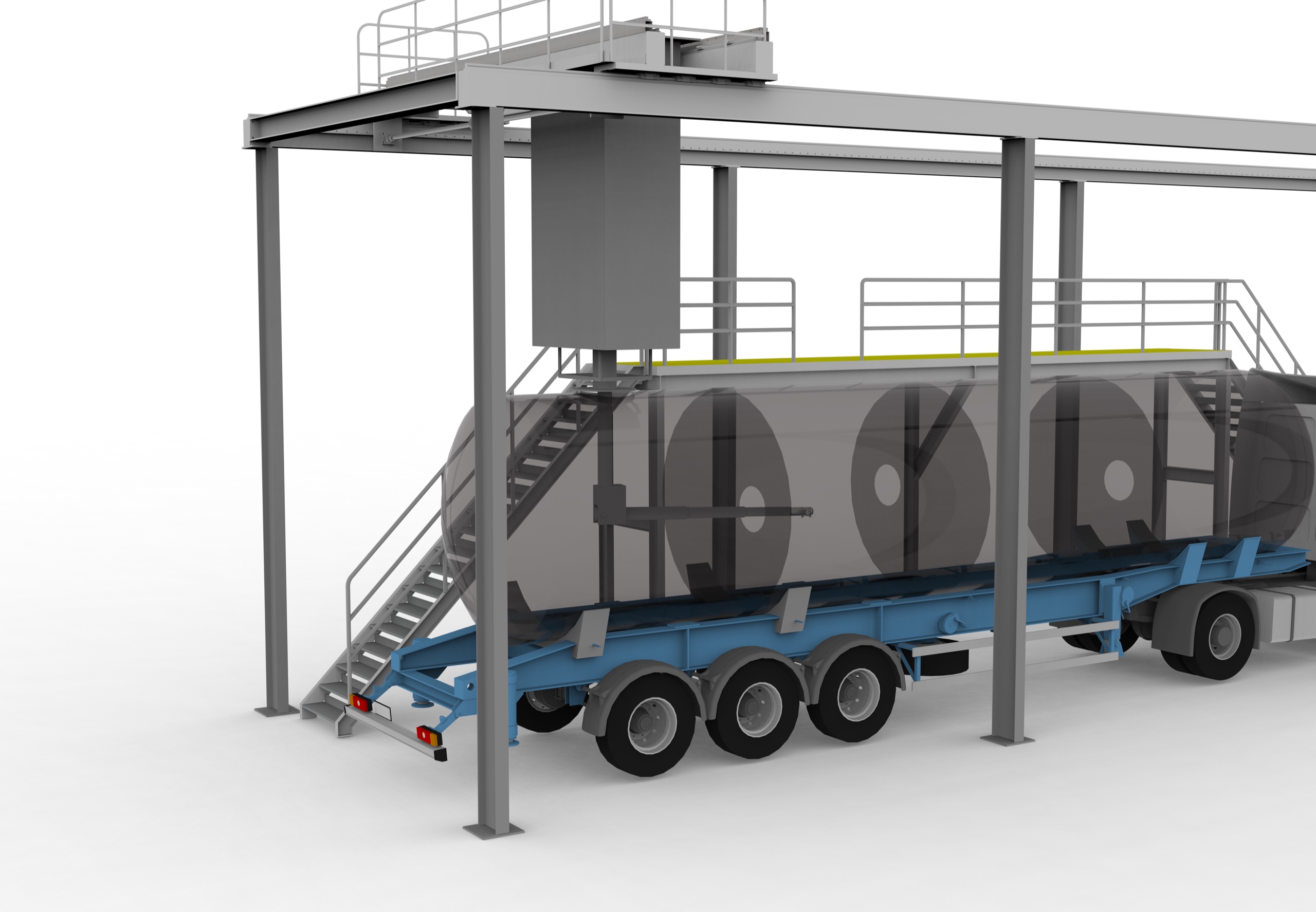
A project-configured equipment system that coordinates interior cleaning with tank truck access, positioning, drying, control and collection interfaces. JAGUI supplies the equipment and can advise on site interfaces; civil construction is outside our scope.
Typical application scenarios
PFLEGE’s technical material identifies chemical, oil, food and hazardous-goods logistics as tank-truck cleaning contexts. The project route can be reviewed from positioning and residual-liquid handling through cleaning, drying, collection and the customer’s final verification procedure.
For tank trucks moving petroleum or petrochemical cargoes where prior cargo, change-of-product requirements and the cleaning route need project review.
For chemical and hazardous-goods logistics where cargo history, tank configuration and the contained collection route require project review.
For food-grade or pharmaceutical liquid tank trucks where product change, drying and customer-defined release requirements are considered with the operating procedure.
Project fit
The final arrangement follows the actual tank truck, residue, operating target and available site interfaces; it is not presented as a fixed package.
Review the tank length, compartment layout, manway locations, access route and vehicle movement required at the cleaning position.
Select the cleaning medium, conditioning step, cleaning-head movement and release method around the prior cargo and target result.
Confirm whether heated-air drying, visual or sensor-based inspection, records and manual verification are part of the operating procedure.
Map drainage, wastewater, exhaust and utility connections alongside the access platform and cleaning bay layout.
Typical project sequence
The supplied workflow is a project reference. Timing, safeguards, media and final acceptance criteria are confirmed for the installation.
Position the tank truck and route residual material to the agreed collection path.
Apply the selected steam or cleaning-medium preparation and establish access.
Run the programmed interior-cleaning sequence with the designated collection interface.
Complete selected drying and project-defined inspection before the tank truck returns to service.
System scope
The equipment system can combine the modules needed for the agreed process and define the interfaces that connect it to the wider site. Civil design and construction are handled by the customer’s appointed contractors.
Cleaning head, lifting or travel arrangement, access sealing and project-defined movement control.
Water, steam, detergent, compressed air and selected drying equipment aligned with the process.
PLC operation, project records, wastewater collection and exhaust-treatment connections as required.
Discuss your tank truck project
JAGUI will use the project inputs to structure the next equipment and interface discussion.